2025 Student Research Symposium

Group photo of student presenters at the 2025 MDSGC Symposium.
Student presenters at the 2025 MDSGC Symposium. Photo credit: EAPhoto.

The 2025 MDSGC Student Research Symposium was held on Monday, August 4, beginning at 8 a.m. EDT.

This year’s event showcased presentations by student interns and researchers working at varied institutions across Maryland, including: The Bryn Mawr School, Capitol Technology University, Hagerstown Community College, Johns Hopkins University, Morgan State University, NASA, Space Telescope Science Institute, Towson University, University of Maryland Baltimore County, University of Maryland College Park, and University of Maryland Eastern Shore.

The venue was the Mt. Washington Conference Center in Baltimore, MD. For GPS navigation, head for “Johns Hopkins At Mt. Washington, Smith Avenue, Baltimore, MD” (link) and park in the nearby visitor parking lot/garage. Below is an image from Google showing the relative locations of parking and the conference venue:

Google map screenshot showing Mt. Washington Conference Center and Visitor Parking relative locations.

The event schedule and full online program are below.

Symposium Schedule

8:00 – 9:00 a.m.
Registration, networking, and breakfast.

9:00 – 10:40 a.m.
Oral Presentation Session I.

10:40 – 11:00 a.m.
Break for Group Photos.

11:00 – 12:10 p.m.
Oral Presentation Session II.

12:10 – 1:00 p.m.
Lunch and Small Group Discussion.

1:00 – 2:30 p.m.
Oral Presentation Session III.

Oral Presentation Session I, 9:00 – 10:40 a.m.

9:00 a.m.
Welcome and Introductory Remarks — Dr. Joseph Eimer, MDSGC Director

9:10 a.m.
Spaceflight Operations Training Center Modernization Project — Kieran Cooke and Ismail Shah (UMCP/CTU)

The Space Flight Operations Training Center at Capitol Technology University recently underwent multiple major additions, including the modern Dell servers, ten new virtual controllers with the latest Galaxy release installed, and ten total virtual spacecraft. This presentation will cover the process of installing those upgrades, reconfiguring the database to work with the new setup, and testing the system to ensure it is ready to be used by students in the upcoming fall semester.

9:30 a.m.
Centrifugal Mirror Fusion Experiment Costing Analysis — Hannah Magruder (UMCP)

An often overlooked part of every good research project, invention, or product, is the cost. Before the public can benefit from a new invention, they must consider the price tag and weigh it against the other bills demanding of them this month. Within the current economic landscape, the cost of things is often more important than anything else, despite a commodities’ possible overwhelming benefits. For a solution such as the Centrifugal Mirror Fusion Experiment (CMFX), that seeks to provide a pathway for clean energy through nuclear fusion, getting cost estimates that satisfy both investors and everyday consumers alike is essential to reaching this future. Using python and github, a cost modeling algorithm was developed for the machine, assessing certain physical property changes of the fusion reactor against the cost of electricity and overall cost of running a nuclear fusion power plant while supplying energy to customers.

9:40 a.m.
Magnetic Diagnostics in the Centrifugal Mirror Fusion Experiment — Justin James (UMCP)

What if I told you that one of the largest temperature gradients in the known universe was right here in Maryland? Well it is true, at the Centrifugal Mirror Fusion Experiment (CMFX) we have supersonically rotating hot plasma inches away from liquid helium superconducting magnets. CMFX expands on the established concept of the magnetic mirror, implementing a radial electric field with a central electrode that causes the confined plasma velocity component to point in the azimuthal direction, thus stabilizing and heating the plasma. Magnetic diagnostics are essential to understanding the interactions between the plasma and the centrifugal mirror. For my summer internship, with input from my mentor and the CMFX team we constructed Bz probes which consisted of an array of three loops. Each loop has 30 turns and a measured cross-sectional area of 6.5 × 10⁻⁵ m2. The probes are then mounted on a window exterior to the vacuum vessel. Each probe was shielded and connected to a digitizer/oscilloscope for data acquisition. The signals are then filtered, integrated, and detrended to produce ∆B graphs. FFT and spectral analysis were implemented to identify sources of noise within the ∆B signals. This builds on the previous research from last year’s internship by improving the signal-to-noise ratio using shielding techniques and by employing Python within Jupyter Lab for data analysis. Preliminary results from the Bz probes suggest ∆B signals on the order of 102 G near mid-plane.

9:50 a.m.
United States Naval Academy STEM Center for Education and Outreach — Lucas Weigel (HCC/USNA)

This country thrives off the inventions, technical systems, and aid of various STEM careers such as doctors, engineers, and chemists. Due to the reliance on these fields, the STEM Center for Education and Outreach at USNA aims to increase the number of students pursuing STEM related subjects and careers. They make this goal possible through the help of USNA faculty, Midshipmen, and interns providing fun and educational modules, to be taught both directly to students and teachers, fostering their interest in various STEM fields.

10:00 a.m.
Calculating the Speed of Light the Old-Fashioned Way — Isaure Roubi (BMS/TU)

We tried to calculate the speed of light by using Roemer’s technique of observing one of Jupiter’s moons’ eclipses at different times of the year. By observing Ganymede’s immersions in May and August, we were able to calculate the difference in time and divide it by the difference in distance between Jupiter and Earth in the spring and fall to find the speed of light.

10:10 a.m.
Using the H I Spectra of Supernova Host Galaxies to Determine a Baryonic Tully Fisher Relation — Paulina Utochkin and Zachary Mittman (TU)

We present the outcomes of an observing campaign to obtain HI spectra of supernova host galaxies from the Democratic Samples of Supernovae (Stahl et al. 2021) using the L-Band receiver on the Green Bank Telescope. The data was collected as part of a project of the Undergraduate ALFALFA Team to generate a template Baryonic Tully-Fisher Relation by combining the GBT sample with an archival sample of 21-cm spectra for a total sample of 160 galaxies with accurate, redshift-independent distance estimates. Here we present our data analysis process and our BTFR result in comparison to the Schombert et al. conclusions. 

10:20 a.m.
The Creation and Development of the Johns Hopkins University Cube Satellite Club — Kyle Dalrymple (JHU)

Driven by a passionate group of students, engineers, and research scientists, the Johns Hopkins University Cube Satellite Club (JHU CubeSat Club) was formed in 2023 with the goal of linking engineers and scientists with undergraduate students who would like to gain hands-on experience in space science and engineering. The JHU CubeSat Club’s inaugural project is focused on the development of an amateur radio ground station that is remote accessible, up-link capable, and designed to support future and current CubeSat missions, including the University of Colorado Boulder (CU Boulder) Supernova remnants/Proxies for Reionization/ and Integrated Testbed Experiment (SPRITE) CubeSat projected to launch in late 2025. In the short term, the club will provide mission communication command and control up-link, and science data down-link on behalf of its partner, CU Boulder. The long-term vision is to provide remote support for multiple missions, by allowing the station to be remotely accessed by other Federal Communications Commission (FCC) licensed partners/collaborators via the Internet. We foresee an opportunity to foster the development of a global network of up-link capable ground stations. Student involvement is integral to our mission at JHU CubeSat Club. We strive to be a bridge for undergraduate students to apply their theoretical knowledge to real world space missions. JHU CubeSat Club continues to give students the opportunity to delve deeper into areas that they have inclinations towards while also fostering an environment that encourages the exploration of different interests.

Group Photos, 10:40-11:00 a.m.

Oral Presentation Session II, 11:00 a.m. – 12:10 p.m.

11:00 a.m.
Engineered Lunar Composite Electrical Resistivity — Sam Heintz (UMCP/NASA GSFC)

This project focuses on characterizing the electrical conductivity of various samples of lunar regolith mixed with paraffin wax and CNT/CF (Carbon Nanotubes/Carbon Fibres) by using a combination of 2 and 4 point surface resistivity measurements. These tests take place at room temperature and at simulated lunar conditions in a thermal vacuum chamber.

11:10 a.m.
NASA Wallops Ground Operations Internship — Logan Hurney (UMCP/NASA WFF)

Hello! My name is Logan Hurney, and I was an Intern at Wallops Flight Facility working with the Ground Operations team at NASA. This Internship was full of fun and exciting things from Rocket Launches, plane rides, and tours to load testing, wiring, and facilities operations. During this internship I was exposed to various valuable experiences, and each day was more exciting than the last!

11:20 a.m.
NASA Journalism, Multimedia, and Social Media — Vivian Renkey (UMCP/NASA GSFC)

In this talk I will outline my role, the duties that came with my job, and how NASA Goddard has shaped my career path..

11:30 a.m.
A Non-Traditional Journey Through Astronomy and Academia — Dr. Kielan Hoch (STScI)

Dr Kielan Hoch will share her journey through academia as a women with a nontraditional background starting from her undergraduate time at Towson University, her graduate studies at UC San Diego, and her time as a Giacconi Fellow at the Space Telescope Science Institute. She will then share her PhD and current research area in Exoplanet studies and how she is pioneering space-based exoplanet science with the James Webb Space Telescope (JWST) and her involvement with the efforts to plan the future space telescope, Habitable Worlds Observatory (HWO) with which we hope to answer the question: are we alone?

Lunch and small group discussions, 12:10 – 1:00 p.m.

Oral Presentation Session III, 1:00 p.m. – 2:30 p.m.

1:00 p.m.
Mission Robotics: Hands-On Learning at UMES — Nnaemeka Onugbolu (MSU/UMES)

This summer, I participated in a robotics internship at the University of Maryland Eastern Shore (UMES) under the auspices of the AIRSPACES (Autonomous Instrumented Robotic Sensory Platforms to Advance Creativity and Engage Students) project, funded by the Maryland Space Grant Consortium. The AIRSPACES project also has synergistic interfaces with the NASA-MSTAR funded DREAM (Developing Robotic Explorations with Agrobots and Moonbots) project ongoing at UMES. My work centered on autonomous navigation and system integration using the Agilex LIMO—a four-wheeled, multi-modal mobile robot equipped with LiDAR, a stereo depth camera, and onboard computing. Leveraging the Robot Operating System (ROS) framework, I explored robot mapping, localization, and navigation, and conducted simulated navigation tasks in the Gazebo environment. The move_base ROS package played a central role in enabling autonomous path planning and obstacle avoidance. In addition, I gained hands-on experience with soft robotics, assisting in mobile and robotic arm applications utilizing soft grippers. Together, the LIMO and soft robotic platforms provided a dynamic and engaging environment that deepened my understanding of robotics and autonomous systems. 

1:10 p.m.
Sustainable Space Agriculture — Philip Alsop (CTU/UMES)

NASA’s Artemis mission, a collaboration with commercial and international partners, aims to establish a sustained human presence on the Moon and apply the lessons learned to support future crewed missions to Mars. As part of this vision, sustainable food production is a critical research area.

Smart agriculture integrates advanced technologies to enhance crop productivity and quality while reducing manual labor through automation. FarmBot, an open-source robotic farming platform, can autonomously perform tasks such as planting, watering, and weeding. This project investigates FarmBot’s watering capabilities to support the growth of alfalfa (Medicago sativa) microgreens in Martian regolith simulant amended with varying concentrations of horse manure. The objective was to identify the soil mixture that yielded the greatest edible biomass. The 50% regolith simulant / 50% horse manure treatment produced the highest yield with a mean biomass yield of 18.15g, followed closely by the 70% regolith simulant / 30% manure mixture with a mean biomass yield of 15.13g.

A second experiment explored soil-less cultivation using aeroponics—a method where plant roots are suspended in air and misted with nutrient-rich water. Broccoli microgreens (Brassica oleracea) were grown in a Tower Garden FLEX automated vertical aeroponic system and treated with a kelp-derived foliar biostimulant at varying concentrations to evaluate its effect on edible biomass. Preliminary findings suggest potential benefits but require further trials to determine statistical significance and overall efficacy.

1:20 p.m.
An Approach to Stand Counts and Crop Health Using Robotics — Suseel Kumar Yerramsetti and Lance Ward (UMES)

Manual methods for stand count and vigor assessments in agriculture are highly time-consuming and error-prone, particularly in large-scale cornfields. This presentation addresses the integration of robotics, computer vision, and artificial intelligence to develop an autonomous and scalable solution for accurate plant detection, counting, and health assessment. Utilizing an AgileX Scout Mini equipped with an Intel Real sense d435i camera, video segments were systematically collected at predefined intervals corresponding to 1/1000th of an acre. OpenCV and YOLOv8 algorithms were employed to ensure precise detection and tracking of individual plants across video frames, addressing challenges such as variable lighting, occlusions, and growth stage variations. Plant health was quantified using a vigor scoring system assessing morphology, stem strength, and color health. Stand count estimates achieved up to 96.67% accuracy when compared against the known seed application rate. The approach demonstrates good potential for practical agricultural applications including crop emergence assessment, early disease detection, growth rate tracking, and yield estimation. Future enhancements aim to integrate drone and satellite imagery for improved detection capabilities, multi-class identification, and expanded analytical functions such as weed and pest detection, disease classification, and cloud-based data processing.

1:30 p.m.
Asteroid Precovery with TESS Data — Justice Thomson (MSU/UMCP)

Understanding the orbits of asteroids is crucial for assessing potential threats to Earth and other celestial bodies. For example, in 2024, an asteroid (2024 YR4) was identified that was initially thought to have a significant chance of impacting Earth. Although further research has shown that it will not hit Earth, there is still uncertainty about its potential to impact the Moon. This project focuses on identifying potential precovery events for such asteroids within archival data from the Transiting Exoplanet Survey Satellite (TESS). By developing a Python-based software pipeline, we cross-reference known asteroid orbital data from NASA’s Small-Body Database with TESS sector observations to determine whether asteroids were observed prior to their official discovery. The process involves querying candidate asteroids, retrieving TESS observation windows using the TESSCut API, and comparing these with discovery dates. Successful matches indicate potential for precovery events, which are instances where an asteroid was captured in images before its official discovery. Initial results show that the potential precovery rate with TESS data is approximately 5%, resulting in a total precovery estimate of up to 6500 objects. These precovery detections will provide additional data points to improve the orbit fitting process and confidence level in impact probability, contributing to planetary defense efforts.

1:40 p.m.
ASIC: Measuring High Energy Radiation in the Upper Atmosphere — Daniel Geer (CTU/UMCP)

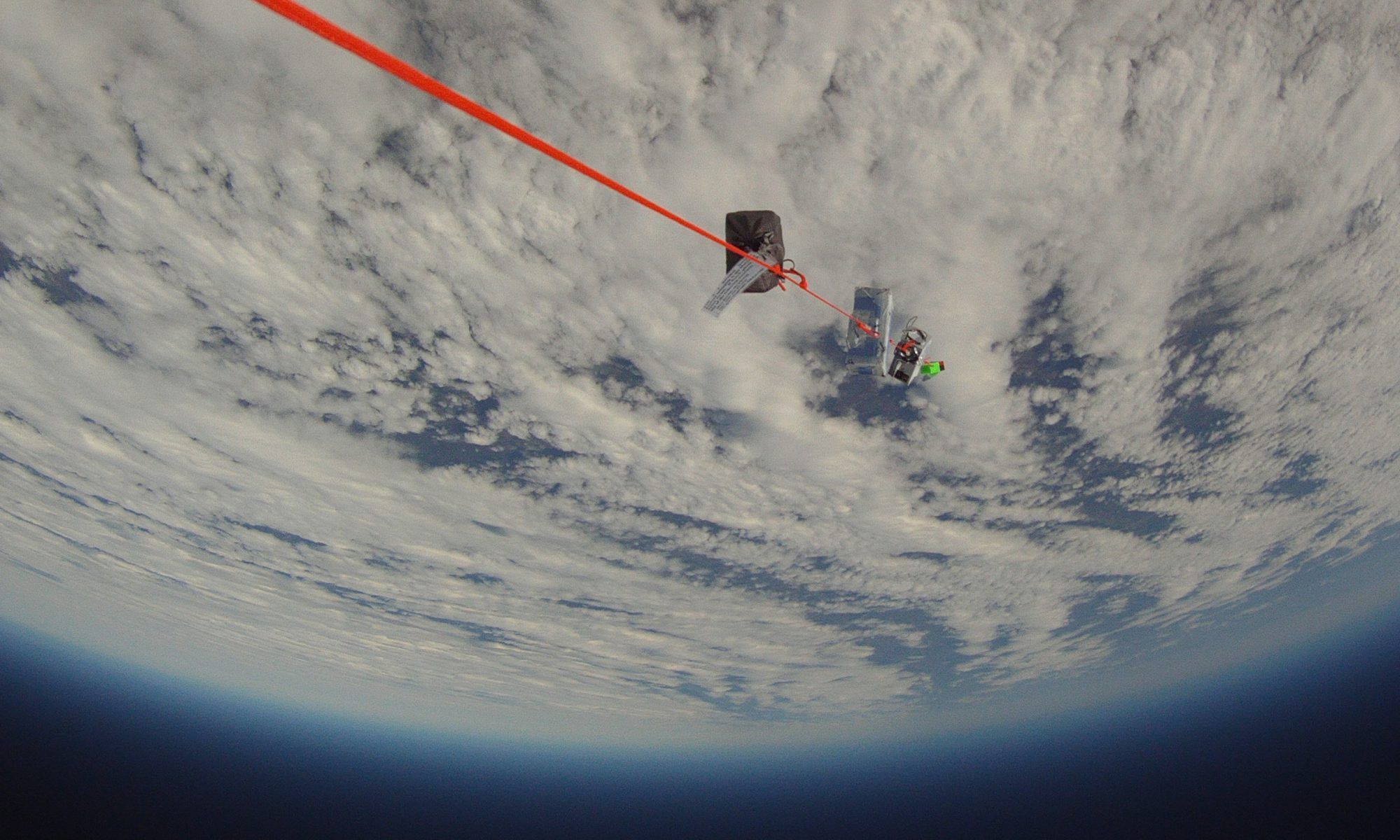
During the last few months I have been working with the UMD’s Ballon Payload Program, gathering and processing data for submission to NASA’s science activation, updating and preparing ASIC and NSO, two balloon payloads that were designed to track radiation in the upper atmosphere. For this payload I have designed, printed and integrated a circuit board, integrated the ability to utilize a real time clock, barometer and easily save the data for analysis later. We are currently looking to integrate a scintillator and are preparing to test the payload on the high-altitude ballon flight on the 9th with a back up date of the 10th of August. 

1:50 p.m.
MDSGC Summer Internship at UMD’s Space Systems Laboratory — Jonah Malcolm (UMBC/UMCP)

At the University of Maryland’s Space Systems Laboratory, I contributed to the development of VERTEX, a modular Mars rover platform designed to support advanced research in robotic mobility and autonomy. My work focused on robotics and control systems, including motion coordination and testing in dynamic environments. The ultimate goal of VERTEX is to serve as a mobile life support system for astronauts during planetary exploration, reducing their workload and enabling safer, more efficient surface operations.

2:00 p.m.
Terp Raptor: A Student-Led CubeSat Mission to Asteroid Apophis — Brent Barbee (UMCP)

The ~340-meter diameter Potentially Hazardous Asteroid (PHA) designated 99942 Apophis 2004 MN4 will make a historic close approach of Earth on April 13th, 2029, passing within ~32,000 km of Earth’s surface, just over 4,000 km closer than the distance of geosynchronous satellites. This is a once in 7500 years event that will be an exceptionally unique opportunity to observe planetary encounter effects on an asteroid. It is also a novel opportunity to collect imagery of a sizeable asteroid via a cubesat in Earth orbit, placing the mission within reach of a university team. Our Terrapin Engineered Rideshare Probe for Rapid-response asteroid Apophis Profiling, Tracking, Observing, and Reconnaissance (TERP RAPTOR) is an Earth-orbiting mission concept in which a 12U CubeSat built by University of Maryland students would perform a flyby of Apophis during the time surrounding its closest approach to Earth and collect visible and near-infrared imagery of the asteroid.

2:20 p.m.
Concluding Remarks — Dr. Joseph Eimer, MDSGC Director

MDSGC offers our sincere congratulations to our student presenters, a huge thanks to our internship mentors, collaborators, and supporting staff, and our hope that all attendees enjoyed and learned from these presentations!

Scholarship Applications

The regular application period for Academic Year 2026-2027 scholarships is now open! The application deadline is May 13, 2026. After that, any student may still submit an off-cycle application for consideration if funding becomes available. For information about the program and to apply, visit the MDSGC Scholarships page.

April 8, 2024: Solar Eclipse

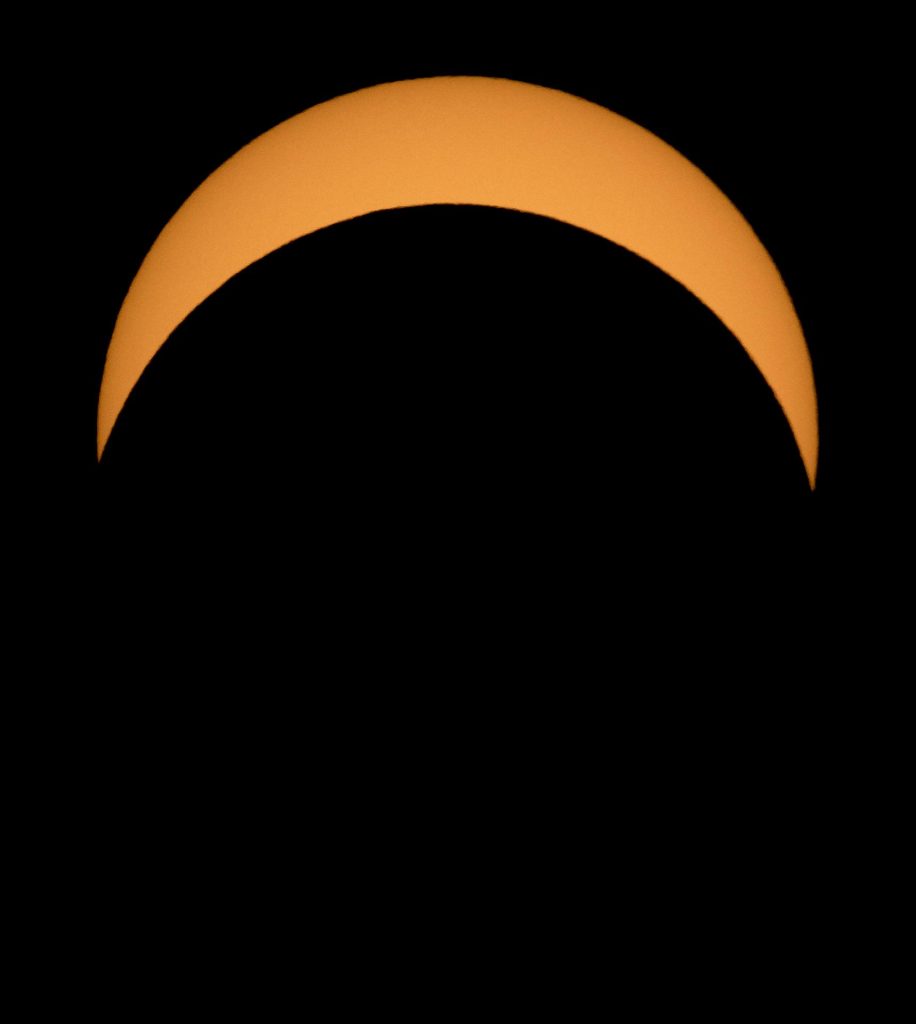
Image of 2017 solar eclipse. Photo credit: NASA/Bill Ingalls.

On Monday, April 8th, 2024, the Moon crossed in front of the Sun as seen from much of North America, giving millions of Americans another chance to experience a solar eclipse. Like in October 2023 and August 2017, Maryland experienced a partial solar eclipse. During a partial eclipse the Sun is never fully blocked by the Moon. This means that it is never safe to look directly at a partial eclipse without special eye protection — regular sunglasses are not okay! Please see below for more information on safe observing practices.

From Maryland, the beginning of Monday’s eclipse (aka “first contact”) was be at approximately 2:05 p.m. according to timeanddate.com, depending slightly on the viewer’s location. Maximum eclipse depth of approximately 90% coverage occurred at 3:21 p.m. and the show was all over at around 4:30 p.m.

For eclipse watchers in the Baltimore area, a couple of opportunities to come out (or stay in) and see the spectacle were:

Eclipse safety: It is very important not to look at the partial eclipse directly unless you have appropriate eye protection such as special eclipse glasses (NOT regular sunglasses) from a reputable manufacturer. Courtesy of NASA, here is a summary of information about eclipse safety. Key takeaways: either use special eclipse glasses or use an indirect viewing method, such as a projected image from a pinhole camera.

While Maryland experienced only a partial eclipse, a swath of the USA stretching from Texas to New England briefly fell into darkness as the Moon fully covered the Sun, creating the fateful (and amazing) condition known as a total eclipse. The image below shows the approximate locations where this occurred; for more detail see NASA’s Where & When.

Map of continental USA showing the path of totality for the April 8, 2024 solar eclipse.
Map of continental USA showing the path of totality for the April 8, 2024 solar eclipse. Credit: NASA.

To all eclipse watchers, we wish you clear skies!

A visualization of stellar open clusters
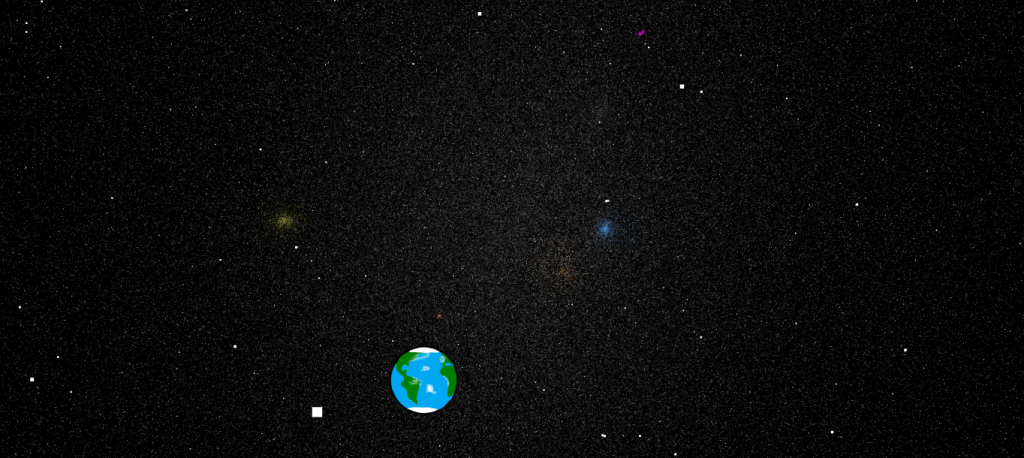
Partial screenshot showing the stellar position visualizer.

Have you ever wished you could venture beyond Earth and explore among the stars? We certainly have. Alas, for the time being such explorations remain in the domain of imagination and science fiction. However, thanks to the precision of modern stellar catalogs, we can map the nearby stars and render their positions on your computer screen, allowing you to explore among them from the comfort of home! Click to access one such stellar visualization, created by MDSGC volunteer M. Prem. The accompanying text explains what is displayed and how it works. Have questions? Please email us at mdsgo@jhu.edu.

Preserving Dark Skies for Astronomy
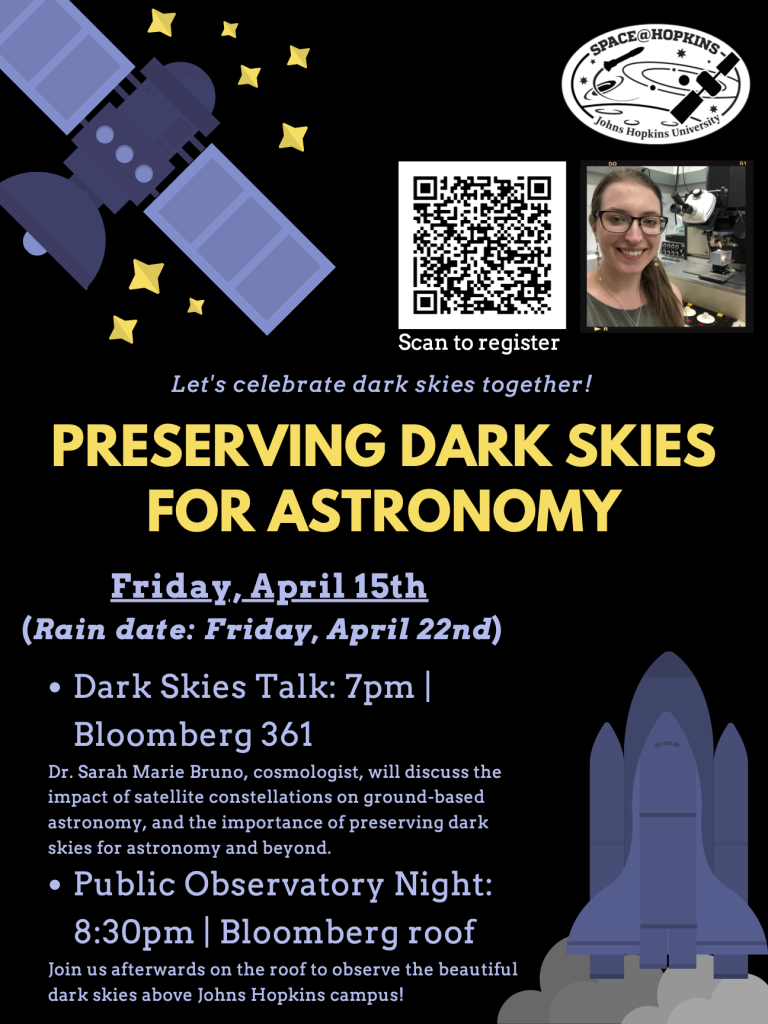
Flyer for Dark Skies talk

Happy April! International Dark Sky Week is coming up later this month. We are delighted to invite you to attend a special two-part event in celebration of dark skies!

  • 4/15/22 @ 7pm ET – Dark Skies Presentation: Join us on Friday, April 15th at 7pm in room 361 of the Bloomberg Center for Physics and Astronomy (Johns Hopkins University Homewood Campus). Dr. Sarah Marie Bruno (JHU), cosmologist, will discuss the impact of satellite constellations on ground-based astronomy, and the importance of preserving dark skies for astronomy and beyond. Light refreshments will be served directly following the talk.

    Preserving Dark Skies for Astronomy: The starry night sky has inspired humanity from the dawn of our history. However, the night sky we can see from Baltimore in 2022 looks vastly different from the skies that Galileo Galilei observed with his telescope or the skies that inspired the star stories of indigenous peoples in North America. Artificial lighting from ground-based sources and reflections off satellites can impact astronomy and impede our ability to witness the natural beauty of the skies. The Milky Way, once a fixture of human experience, is now hidden from view for over two thirds of the world’s population. Sadly, light pollution is only getting worse with the increasing number of commercial satellites flooding low-Earth orbits. While satellite constellations such as SpaceX’s Starlink will likely boost the global economy and increase internet accessibility worldwide, they will introduce additional light pollution and foreground contamination which may greatly impede astronomical observations from the ground. Specifically, solar reflections, radio frequency transmission, and thermal emission will impact ground-based astronomy in the optical, radio, and microwave frequencies, respectively. Bruno wilI (1) discuss the projected impact of the growing space industry on the field of astronomy, (2) present proposed strategies for mitigating these effects, and (3) reflect on the importance of preserving the dark sky environment not only for astronomy, but for human health and wellbeing. 
  • 4/15/22 @ 8:30pm ET – Observatory Open House: After Dr. Bruno’s talk, we will migrate up to the roof of the Bloomberg building for an observatory open house. We expect that observing will be possible beginning around 8:30pm. We will use the telescope in the observatory to view the stars and planets and an additional smaller telescope on the roof to observe the Moon. Join us in celebrating the beautiful dark skies above Johns Hopkins campus! 

Please note that due to space limitations on the Bloomberg roof, this event is restricted to the first 50 registrants. Please sign up here to attend.

The event is free to attend and free parking will be available on the Upper Muller Lot (located next to the Bloomberg building and accessible off of San Martin Drive.)

 Note: This event (both talk and observatory night) is subject to rescheduling depending on the weather. The following Friday (4/22) is a backup day. Registered attendees will receive an email by the evening of April 14th confirming whether the event will take place April 15th or be postponed to April 22nd. 

Interactive Astrophysics Stories

At the MDSGC Observatory, we’re always looking to share our enthusiasm about the Universe and its many fascinating phenomena. Therefore, we’re pleased to present this short series of interactive online astrophysics stories!

#4: Detecting Exoplanets via Transits
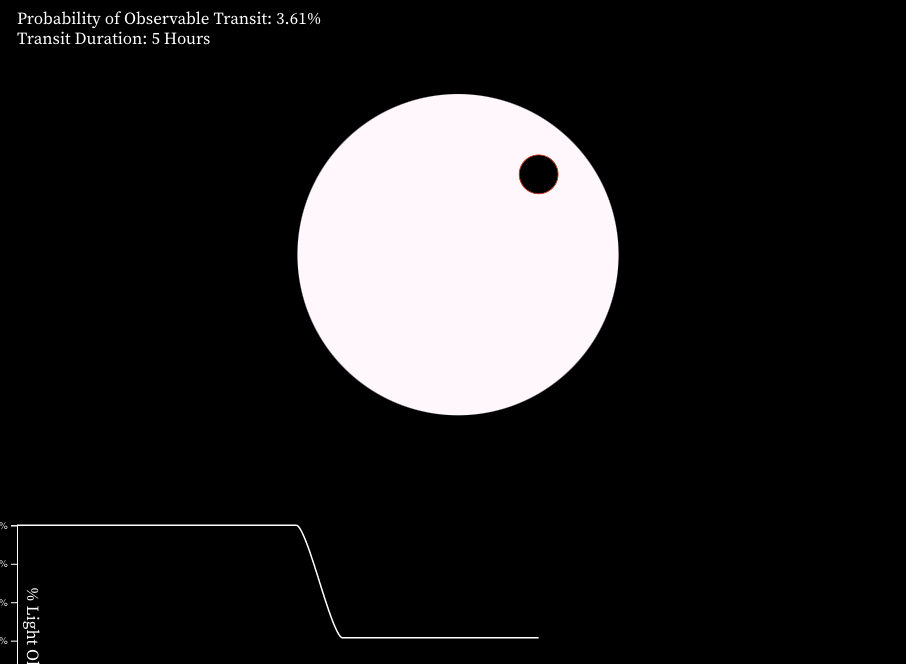
Snapshot of a simulated planetary transit across the face of its host star.

Since the first discoveries starting in the 1990s (see post below), the continued search for new exoplanets and the study of their properties has grown into a major area of astronomical research. As additional effort has been invested and new technologies have been developed, the primary techniques for finding and characterizing new exoplanets have also evolved. Follow this link over to our Exoplanet Transits story at ObservableHQ to learn about how astronomers have discovered most of the exoplanets we now know — and where we’re still looking to improve our knowledge!

#3: Hot Jupiter Systems
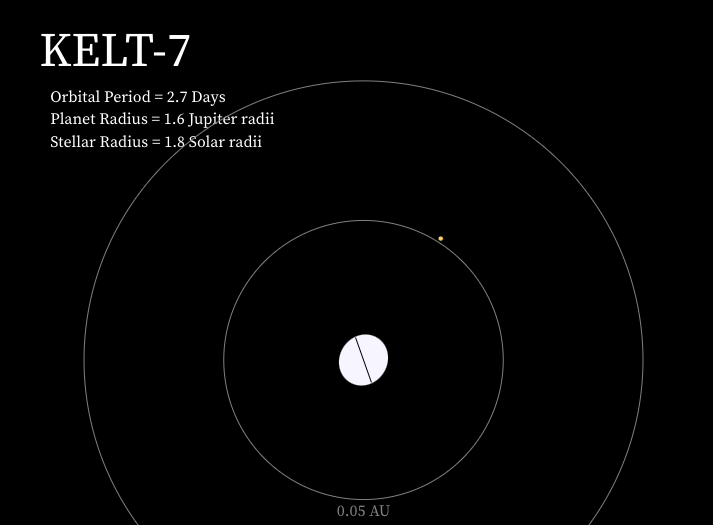
Still frame of an animation of a Hot Jupiter planet orbiting its host star.

Until the 1990s, the only planets known to science were the nine* of our own solar system. As technology progressed and astronomers began to focus their efforts on looking for planets around other stars, they received several great surprises in the form of just how different the first discovered “exoplanet” systems were, compared to ours. In the decades since, intense efforts have revealed a more detailed picture, and we now understand planetary systems to be a widespread if not universal phenomenon — as astronomers had hoped all along. But the earliest discovered systems continue to play an important role in our new understanding. Follow this link over to our Hot Jupiter story at ObservableHQ to learn more!

(*Those were the days, eh, Pluto?)

#2: Imaging a Star Cluster
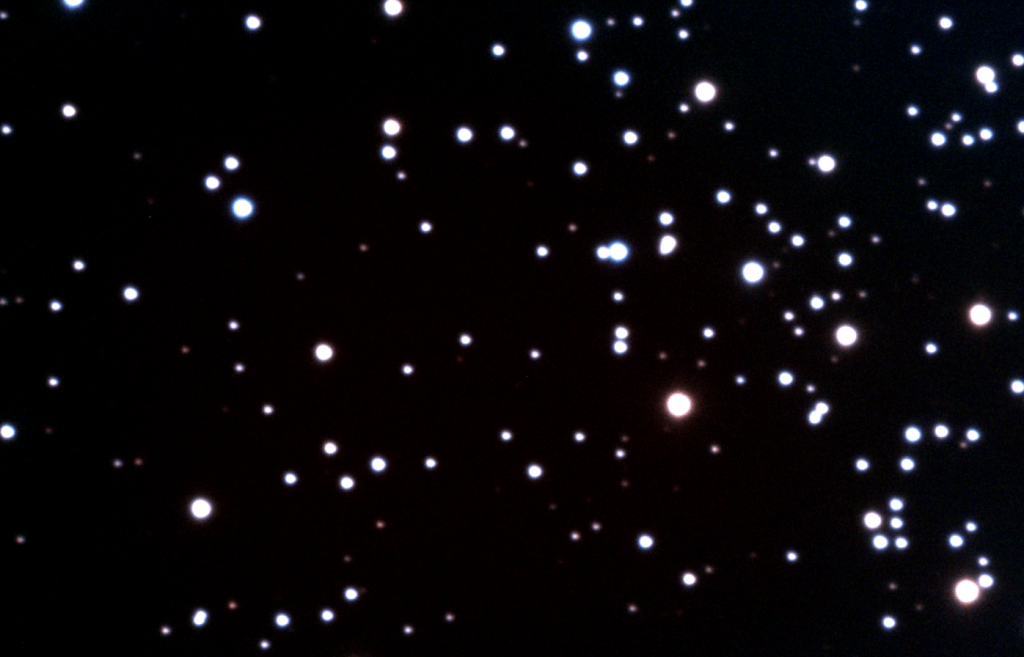
Image of stars in Messier 67 taken from the Maryland Space Grant Observatory.

When it comes to practical astronomy, whether we’re idly admiring the night sky or concentrating closely on a telescopic view, star clusters are some of the most interesting things up there. The image above shows a portion of the star cluster Messier 67 obtained from our Observatory. (Another prime example of a star cluster is also one of the Fall sky’s highlights: the Pleiades, or Seven Sisters.) So what, apart from simple visual appeal, makes star clusters interesting for astronomers?

Follow this link over to our interactive Star Cluster Image story at ObservableHQ to learn more!

#1: The Earth-Moon System
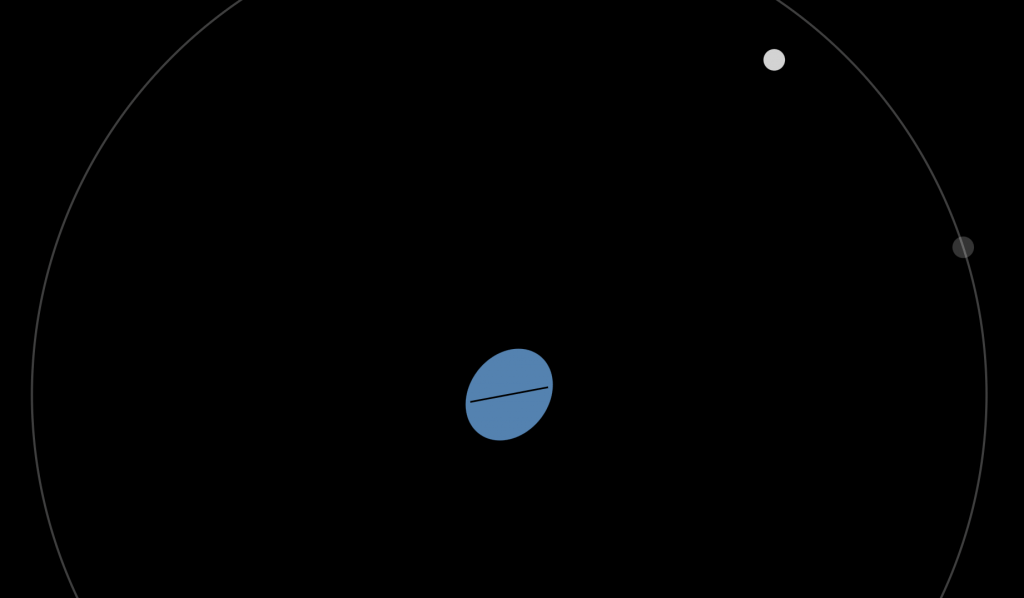
Still frame from animation of the Earth-Moon system at the epoch of the dinosaurs, showing Earth's tidal bulge.

It was Fall as we wrote this, and in Earth’s northern hemisphere the days were getting shorter. DayLIGHT, that is! But did you know that actually, the length of Earth’s day is increasing as time goes on? What’s that all about, and what in the Universe could be responsible?

Follow this link over to our interactive Earth-Moon System story at ObservableHQ to find out!

After reading, send us your questions and let us know what you think at mdsgo@jhu.edu!

Observe the Moon
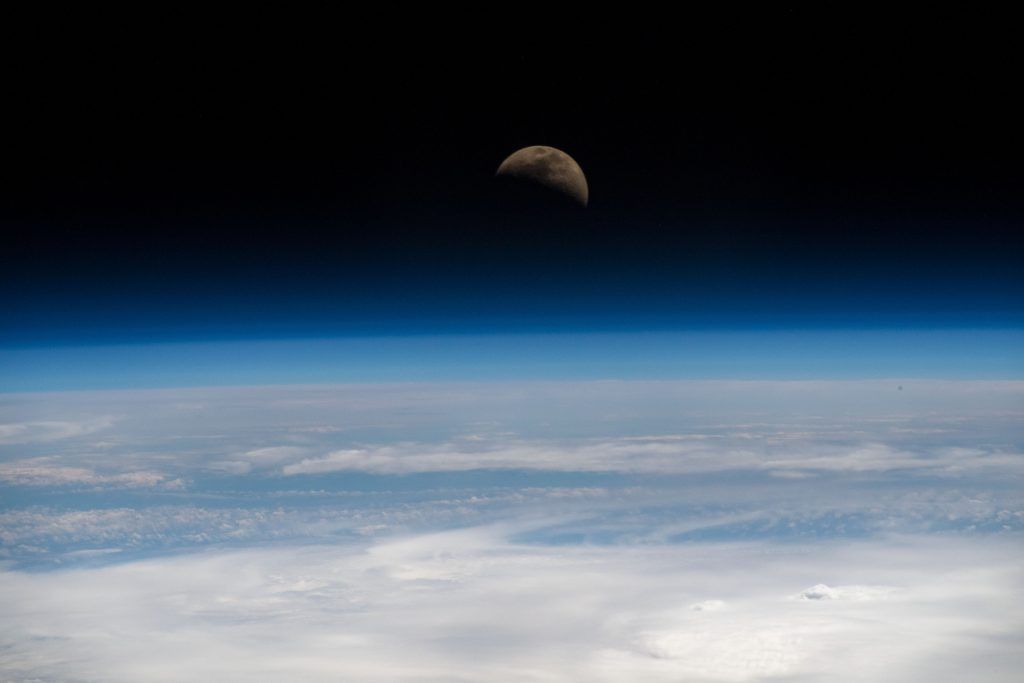
First quarter moon over Earth's limb; photo taken from ISS.
Image of the Moon over Earth’s limb, taken from the International Space Station in 2019.

While most of our attention may understandably be consumed by events taking place here on planet Earth, it’s a good practice to pause occasionally and take in a larger perspective. A fine occasion for such activity presents itself whenever clear skies align with favorable Moon phases.

Each year, International Observe the Moon Night, marked in 2020 on Saturday, September 26th, encourages Earthlings to point our gazes skyward and appreciate our closest celestial neighbor. (NASA organizes a list of events that might allow for an in person experience, as well as ways to participate from home.)

The first quarter lunar phase each month is widely considered to be best for viewing because of its evening visibility and the oblique angle of sunlight that throws its surface details into sharp relief. When looking at the Moon from Earth, we definitely recommend grabbing a pair of binoculars, if available, as any amount of magnification greatly enhances the visibility of surface features such as craters.

And while you’re thinking about gazing skyward, don’t forget to think about other ways to get your astronomy fix, and be sure to check out Sky & Telescope’s Sky at a Glance for more detail about what’s on the celestial menu these days.